What are Concrete Polishing Services?
Concrete polishing services upgrade dull, unfinished parts into refined, lasting flooring. In commercial and industrial environments, this approach has gained momentum due to its clean appearance, structural strength, and reduced upkeep demands. It doesn’t add layers. This method enhances the existing base.
Concrete polishing is a mechanical refinement process that improves surface density, smoothness, and light reflection. The controlled abrasion, strengthening treatments and raw material evolve into a sleek, resilient platform suitable for warehouses, retail spaces, offices, and production facilities. It’s not just basic patching or sealing. This professional polishing delivers deeper surface enhancement, consistent texture, and extended performance.
Companies like Floor Polish Masters apply advanced techniques that go beyond simple surface correction. In this guide, readers will gain clarity on how polishing works, where it fits best, and why it stands apart from conventional concrete upgrades.
Understand the Polished Concrete
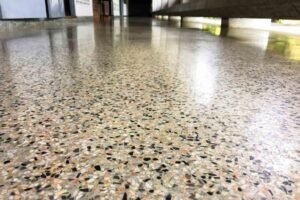
Polished surfaces are not a single finish. They are a spectrum of visual outcomes that are made by the degree of refinement. Some environments benefit from a soft, satin-like appearance that minimizes glare, and others demand a mirror-style sheen.
This flexibility aligns flooring with functional needs. The material delivers notable strength, handling daily wear without frequent repairs. Light reflection increases visibility inside large facilities and reduces dependence on artificial illumination.
Another advantage lies in upkeep simplicity—routine cleaning replaces intensive maintenance schedules. Instead of coatings that peel or discolor, the surface remains stable.
Concrete Floor Polishing Explained
Floor enhancement through this technique follows a deliberate sequence. The experts evaluate the slab’s condition, identify surface flaws that could impact results. Preparation involves clearing residues, adhesives, or uneven areas before refinement starts.
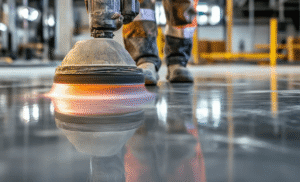
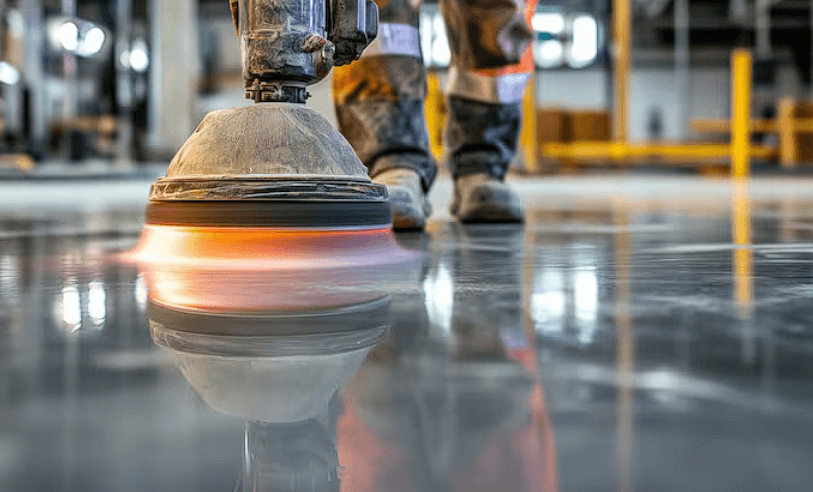
Next comes a staged abrasion phase, where progressively finer tooling reshapes the surface and creates uniform texture. Once the desired smoothness develops, strengthening agents are introduced to improve density and longevity.
Our final steps include sealing, which locks in appearance and guards against moisture intrusion. We use specialized machinery, industrial-grade abrasives, and controlled application methods in each stage.
Concrete Grinding as The Foundation of Polishing
Grinding serves as the backbone of any successful floor refinement project. Without this phase, surface inconsistencies remain hidden beneath finishes and cause uneven results. The grinding removes old coatings, stains, and minor defects and reveals a clean base ready for further enhancement.
It also corrects height variations, which helps achieve balanced texture across large areas. This stage differs from full surface finishing because its purpose is correction. While grinding focuses on preparation and material removal, complete polishing.
Concrete Surface Polishing for a long-lasting Finish
This solution reinforces the upper layer of a slab so it performs reliably under constant use. This method strengthens the material itself. The slow refinement and surface hardening treatments help floors gain improved resistance against scuffs, moisture penetration, and daily impact.
The outcome is a stable, renewed surface that maintains its appearance even in demanding environments. One of the key advantages lies in consistency—there is no peeling, bubbling, or uneven aging.
The light interaction also improves, which contributes to brighter interiors without added fixtures.
Types of Concrete Floor Suitable for Polishing
All slabs don’t look identical but many can support a polished outcome. The newly poured surfaces respond well due to uniform composition and allow smoother refinement. The older installations, including those in renovated buildings can also qualify after fixing cracks, stains, or residue.
Structural integrity plays a central role; stable bases produce better results than weakened or moisture-damaged ones. Even areas with previous coatings can be adapted through corrective preparation. Moreover, factors – thickness, curing history, and usage patterns influence suitability more than age alone.
Industrial Concrete Flooring Applications
In large-scale work environments, the focus is to support operations not how it looks. Polished concrete meets that expectation by offering a stable base that matches workflow demands. The distribution hubs, automotive facilities, and processing plants benefit from its ability to handle constant motion without surface breakdown.
The smooth profile promotes efficient movement of forklifts and carts and reduces vibration-related wear on equipment. The cleanliness also becomes easier to manage, as the dense surface limits particle release and simplifies wash-down routines.
Temperature fluctuations common in industrial settings have less impact compared to layered materials that expand or separate over time.
Commercial Concrete Floors and Their Advantages
Commercial interiors require floors that are attractive with everyday practicality. This type gives a refined look without the fragility. The retail stores, corporate offices, hospitality venues, and educational buildings benefit from its ability to maintain visual consistency.
Thus surface adapts well to open layouts and complements modern design trends while remaining neutral enough to fit varied branding styles. The other advantage lies in longevity—spaces retain their finished look longer, even under daily use.
Concrete Floor Finish Options
Concrete finishes vary widely and allow property owners to align surface appearance with functional goals. The lower-sheen finishes create a subtle texture ideal for spaces prioritizing slip resistance and understated design.
The mid-range ones strike a balance and offer a smoothness with moderate light reflection. It is ideal for multipurpose areas. The high-sheen finishes provide a bold, reflective look that enhances brightness and complements expansive interiors.
The experts at Floor Polish Masters can also adjust decorative exposure levels. Each finish responds differently to lighting, foot traffic, and maintenance routines that means a selection is an important planning phase.
Achieving the Perfect Concrete Shine
Concrete shine is not the result of a single step but the outcome of surface refinement, material density, and ongoing care. The light interaction plays a major role, as smoother surfaces reflect illumination evenly and create a better interior.
The level of gloss depends on refinement stages, hardening treatments, and final conditioning. Consistent cleaning methods help preserve visual clarity and prevent dullness caused by residue buildup.
The environmental factors, such as traffic flow and usage patterns also influence long-term appearance. High-activity areas need periodic conditioning to maintain reflectivity.
Benefits of Choosing Polished Concrete Floors
The enhanced surface resists wear from continuous use. It also extends service life compared to layered flooring systems. Plus, the cleaning routines become simpler. This minimizes ongoing expenses and operational disruption.
The energy efficiency also because the reflective surfaces elevate lighting and lower dependence on fixtures during daylight hours. From an environmental standpoint, the procedure reuses existing materials, which means less waste and the need for additional products.
When Should You Consider Concrete Polishing Services?
Concrete polishing services become relevant when existing flooring no longer meets operational or visual expectations. The spaces that suffer from constant foot or equipment movement need a more resilient surface.
So the renovation projects provide another opportunity, especially when underlying slabs remain structurally sound. New developments also incorporate polishing to avoid future replacement cycles. If maintenance demands have become excessive or coatings require frequent reapplication, polishing offers an alternative that reduces upkeep.
The facilities seeking brighter interiors without structural changes may also find value in this approach.
Conclusion
Concrete polishing stands out as a practical flooring solution. We never replace materials or add temporary layers; it works with the existing foundation. This makes it a smart option for both upgrades and new projects.
One of its strongest advantages is predictability. After the completion, performance remains consistent with zero unexpected maintenance demands. The reliability supports better planning for facility managers and business owners.
Polished surfaces also contribute to a cleaner indoor environment by limiting dust accumulation and surface breakdown. As design trends shift toward open, functional spaces, this treatment continues to align with modern expectations without frequent updates.