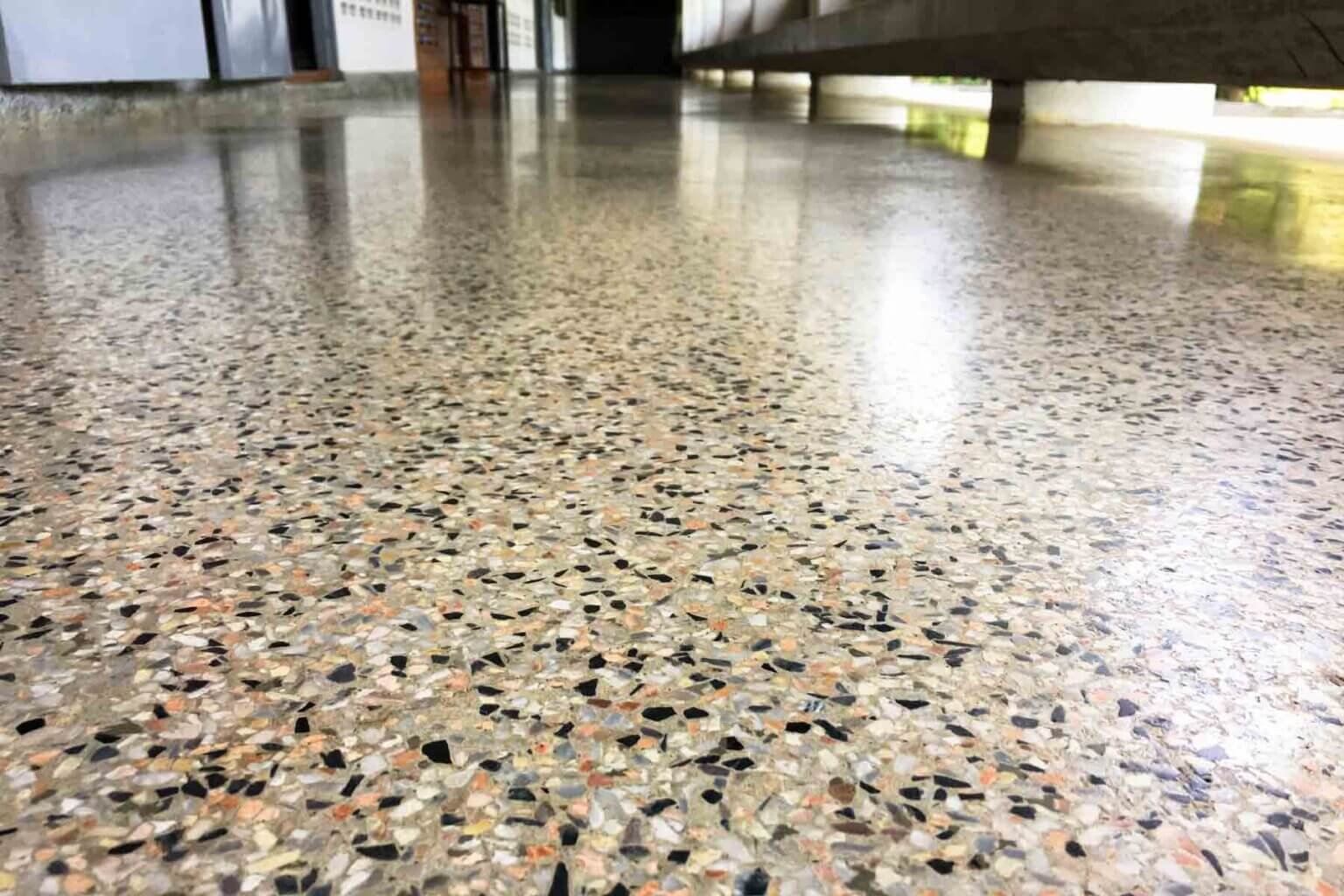
From ancient Italian homes to modern high-rises, terrazzo is a kind of flooring. It is chips of marble or glass dissolved in cement or glue that are tough but easily damaged by bad cleaning habits. It is a sponge with tiny pores that absorbs liquids quickly, and if not properly maintained, it will leave dark stains and a dull look. Sealing the surface and sweeping up spills will protect this investment. We at Floor Polish Masters LLC preserve those surfaces. A terrazzo floor is an investment, we want every property owner to know how to care for stained terrazzo floors properly. By avoiding harsh household chemicals and using pH-neutral terrazzo cleaning and stone-specific protocols, you can keep the surface looking just like new.
The Science of Terrazzo and Why It Stains
To manage terrazzo you need to understand more than a hard surface, you need to understand its chemistry. Terrazzo is a binder-based composite material “concrete confetti” that is, it is made of aggregate chips held together with binder. It creates two vulnerability types that every property manager or homeowner must navigate. First, the binder. The majority of traditional terrazzo floors are cementitious. At the microscopic level, cement is a sponge. It contains millions of little capillaries & poor’s. Any liquid that spills onto the surface sits there and gets soaked into the floor structure, creating stains that are notoriously hard to remove without a barrier. The second component makes even modern epoxy-based terrazzo susceptible to damage because it contains a resin binder impervious to water, the epoxy resin itself.
Its aggregate chips, the colored flecks that give terrazzo character, are made of marble, limestone, or travertine. They are made chemically of calcium carbonate. This mineral reacts strongly with acids. Common acidic liquids such as orange juice or wine, vinegar, soda or harsh bathroom cleaners react chemically with the floor when they splash. This isn’t a stain in the traditional sense of the word; it’s an intermediate reaction. It is a chemical burn called etching. Because this is actual damage to the stone structure and not a surface deposit, you cannot wipe it away or clean it off. Sometimes removing an etch mark involves professional terrazzo floor polishing of the stone to remove the old damaged layer.
How to Clean Stained Terrazzo Floors Daily
Professional cleaning routines stop damage before it begins. It is “dry” friction that causes most dull terrazzo floors, not liquid spills. Fine grit and sand brought in from the outside acts like sandpaper and grinds down the polished finish with each step. Clean stained terrazzo floors with a daily pass of a dry, clean microfiber dust mop. This grabs all the abrasive particles without scratching the surface.
For wet Terrazzo cleaning use a neutral pH stone soap. Use the cleaner in a clean microfiber mop coupled with lukewarm water. Leave the solution on the floor for several minutes to remove oils and area grime, but don’t let it dry. Last, but not least, rinse. Mopping with filthy water spreads grime into your pores. Follow with a second rinse with water, followed by a dry buffing with a clean towel for hazy water spot prevention.
Effective Methods to Restore Stained Terrazzo Floors
If stained terrazzo floors are showing deep seated marks or years of wax buildup, you may need to restore them. Restoration is not cleaning. It involves reaching into the stone to lift contaminants out. For organic stains like coffee or dark fruit juices use a poultice. If you mix a stone-safe cleaning powder and mild hydrogen peroxide to create a paste, you create a vacuum which pulls the stain from the terrazzo when the paste is dry.
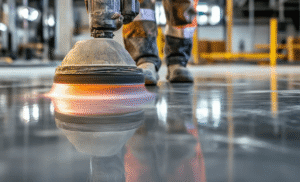
Where the floor has become very scratched or yellowed from old coatings, mechanical Terrazzo resurfacing is necessary. This involves “honing,” where a professional floor machine uses low-grit diamond-impregnated pads to shave away a very thin layer of the damaged surface. This shows new bright stone and binder underneath, “setting” the floor to original condition and ghosting from old stains or carpet tack strips.
How to Polish Stained Terrazzo Floors for a Mirror Finish
High gloss luxury terrazzo shines because light reflects off the smooth surface. You must continue grinding diamonds with finer grits to polish stained terrazzo flooring. At Floor Polish Masters LLC we use a coarser grit to buff out imperfections and 3000-grit or higher pads to seal the stone. This mechanical polish creates a glow in the stone instead of sitting on top of it.
Some homeowners try to achieve a shine with topical waxes and “high-gloss” finishes. These are temporary beauties that attract scuff marks and turn yellow from oxidation. The best is a true mechanical polish, which lets the floor breathe and is easier to maintain. If you want a DIY touch-up, a good terrazzo polishing powder can be used on small dull spots with friction and water to restore the local sheen without any heavy machinery.
The Importance of Sealing in Terrazzo Polishing
The best preventative step is sealing stained terrazzo floors. Even a perfectly polished floor has porosity, so a sealer is like a shield. We recommend an impregnator/high-performance penetrating sealant. Instead of filming on the surface with topical sealers, penetrating sealers sink into the stone and form a hydrophobic shield. This doesn’t make the floor “stain-proof,” though it does make it “stain-resistant” by giving you 20 to 30 minutes to wipe up spills before they penetrate the surface area.
A sealer is mandatory for high traffic areas or for areas where moisture is constant such as kitchens and bathrooms. It keeps the cement binder from “blooming” – that white, powdery residue often found on unsealed terrazzo. Dropping a little water on the floor is a quick test to see in case it needs resealing. If the water beads up your sealer is intact. If the application soaks in and darkens the stone, it’s time for a new application.
Why Choose Floor Polish Masters LLC for Your Restoration?
While daily dusting is something anyone can do, deep restoration requires experience and precision. The balance between aggregate and binder is important in terrazzo. The wrong machine speed or an aggressive pad can cause “pitting,” knocking marble chips out of their sockets and ruining the floor. Floor Polish Masters LLC uses advanced diamond technology and eco-friendly, pH-balanced solutions to revive your floors. We know the differences between historic cementitious terrazzo and modern epoxy systems. The floors aren’t just cleaned by our team. We treat them like architectural art; each corner is perfected, and each stain is solved chemically and mechanically.
A Proactive Terrazzo Maintenance Schedule for Terrazzo Refinishing
And you need to change how you think about cleaning terrazzo floors to keep them looking new for decades. Rather than waiting until the floor gets dirty or dull to do anything about it, which makes cleaning a huge, difficult chore, you should plan terrazzo maintenance as a steady process. Brush your teeth like you would floss your teeth. You don’t just start brushing when you have a cavity; go ahead and brush now! You do a little every day to prevent it. The same with Terrazzo. Sticking to a routine—quick daily dusting to remove gritty sand , prevents damage before it happens. This “continuous” method is easier and cheaper than trying to patch up deep stains or scratches yourself later. It makes floor care a habit that keeps your property looking new day after day.
Grit should be removed by dust mopping or vacuuming daily without a beater bar. It’s important because loose dirt and sand act underfoot like sandpaper, grinding away the finish of the floor with each step people take. Weekly, you should do a damp mop with a pH neutral cleaner. Use a neutral solution instead of harsh acidic products such as vinegar to refresh the surface and remove sticky oils without stripping the protective seal away or making the floor look hazy. Finally, for long-term care, we recommend a professional terrazzo refinishing once every one to two years depending on foot traffic volume. It is a check-up that allows an expert to evaluate the wear layer to see if a screen and recoat light buffing followed by new sealer application is needed to remove micro-scratches. This prevents finish from wearing down to bare material and avoiding huge, expensive restorations later on in the life of the project, keeping your property looking new year-round.
Conclusion
Terrazzo restoration and maintenance requires patience and the right materials. With this professional cleaning, polishing & restoration, and care for stained terrazzo floors, you are cleaning more than a surface; you are preserving art. Whether you have a century-old floor in a historical building or maybe a new installation in a modern house, the rules will be the same: do not mess with the rules. Use neutral solutions and avoid acids; use mechanical polishing instead of chemical waxes; and use pH-neutral solutions. Floor Polish Masters LLC will keep your terrazzo shining as an elegant and durable part of your interior design.